AI and project management: the end of PMOs?

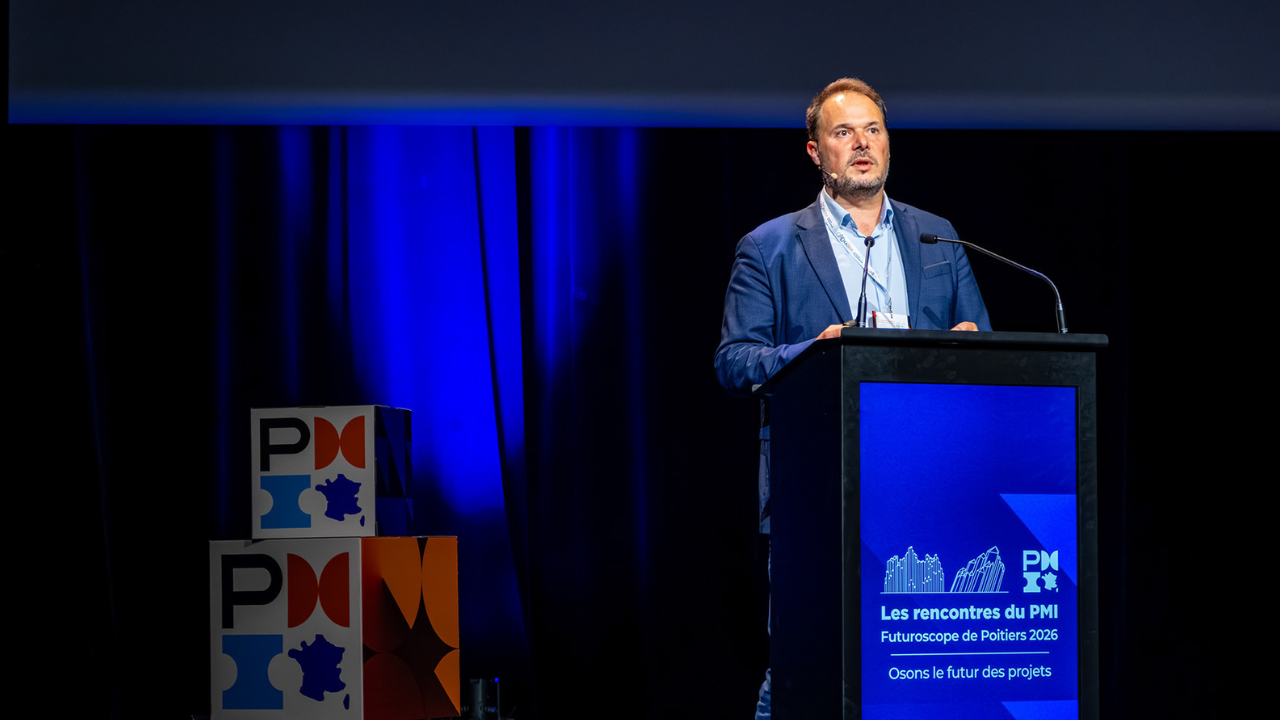
During our last Tabsters Breakfast, dedicated to the impact of artificial intelligence on project management, one question sparked lively discussion: will AI spell the end for PMOs?
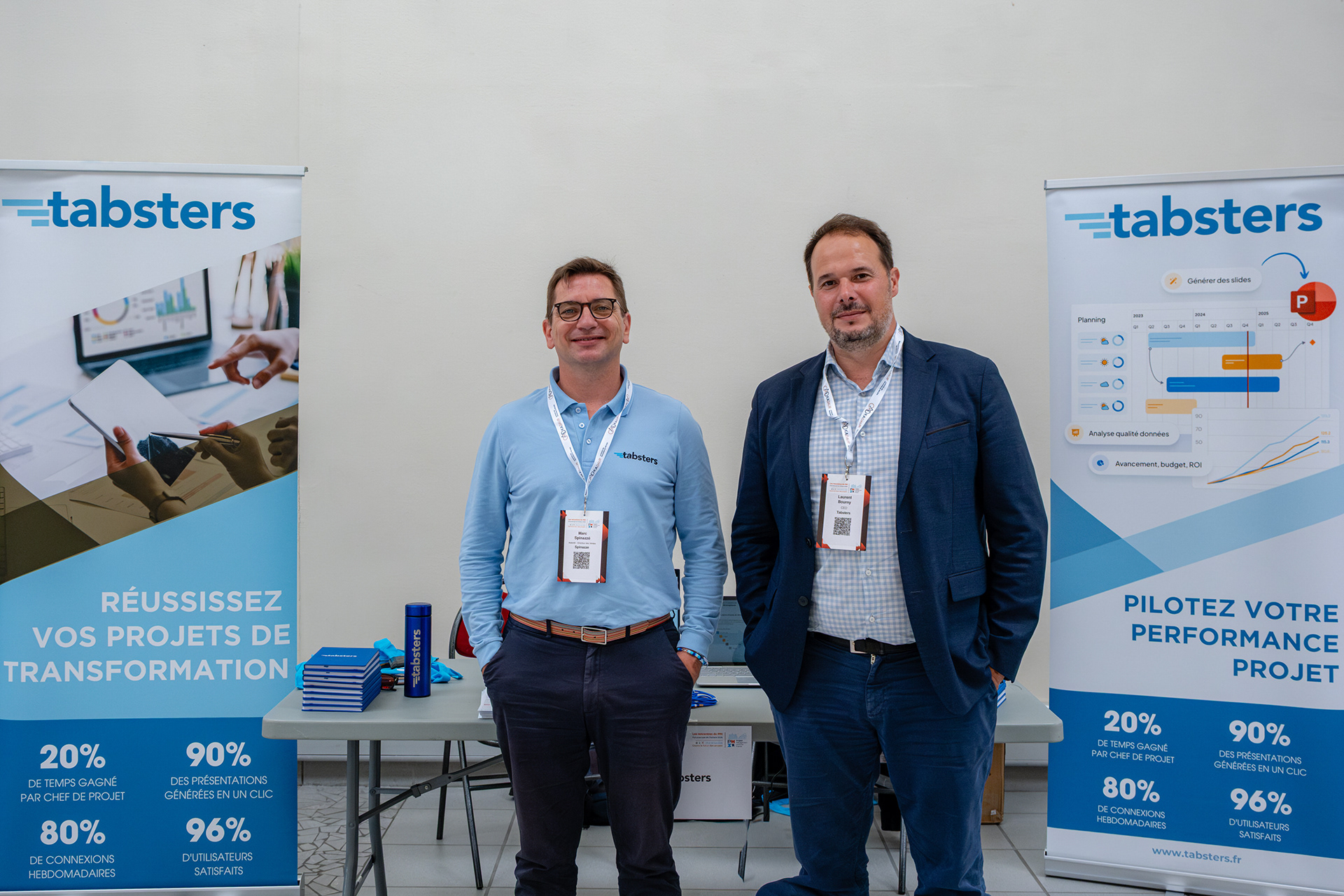
The response given by Laurent Bourny, CEO of Tabsters, is deliberately provocative:
"Yes, AI will put an end to part of the PMO profession.
But no, it won't eliminate the role. It will transform it."
To understand this transformation, it is useful to look at what has already happened in other sectors.
When technology redefines a profession
About ten years ago, teams responsible for foreign exchange transactions played a central role in trading rooms. Their work was largely based on three levers: access to information, connecting players, and the ability to structure and present transactions. In practical terms, these teams received customer requests, negotiated prices with traders, and structured transactions. It was a job that involved a great deal of interpersonal interaction, but was also very manual.
Then digitalization arrived.
Electronic platforms have made it possible to instantly compare prices between establishments. Products have become standardized, and competition has become immediate.
As a result, certain activities proved to be structurally unprofitable, with sometimes more than 50% of transactions carried out at a negative margin. Value no longer came from human intermediation.
The consequences were swift: automation of simple tasks, massive reduction in teams dedicated to standardized operations, and a profound transformation of the role of sales. When a profession derives its power from access to fragmented information and its formatting, technology almost always ends up disrupting it.
The parallel with PMOs
If we look at some of the traditional tasks of the PMO, the parallel is striking.
For a long time, much of the PMO's value lay in its ability to collect information scattered throughout the organization, harmonize formats, consolidate data, and produce reports for governance bodies. In other words: transforming a set of heterogeneous information into a synthetic vision for management.
But today, generative AI technologies and language models are profoundly changing the game. These tools are now capable of ingesting large amounts of information, automatically standardizing formats, consolidating data from multiple sources, and generating summaries, dashboards, or presentations in a matter of moments.
What could have required multiple PMOs, weeks of consolidation, numerous back-and-forth exchanges, etc., can now be accomplished in a matter of hours.
Real change: beyond productivity gains
However, reducing the impact of AI to a simple time-saving measure would be a mistake, as the transformation it brings about is much more profound.
1. Standardization is becoming the norm
AI facilitates the rapid dissemination of common models: reporting templates, indicators, tracking formats. Practices become more consistent across an organization or group.
2. Continuity no longer depends on one person
Historically, the quality of project management often depended on the rigor of a PMO, its experience, or simply its level of commitment and motivation. Automation helps reduce this variability.
3. New analytical capabilities are emerging
Thanks to AI and machine learning, it is now possible to produce analyses that were rarely carried out before due to lack of time or capacity, such as delivery projections, early detection of deviations, budget scenario simulations, and resource arbitrage.
In other words, AI does more than just automate reporting: it paves the way for more predictive and strategic management.
The trap: refusing to evolve in your role
The history of digitization in finance reveals another determining factor. While some jobs have disappeared, this is not only for economic reasons, but also because some professionals refused to evolve in their roles.
In trading rooms, institutions had identified the challenge: shifting sales teams from execution to consulting. Those who successfully made this transition repositioned themselves in strategic consulting, hedging strategies, and financial structuring.
Those who remained focused on execution tasks gradually disappeared.
The future of the PMO: three new dimensions
The transformation awaiting PMOs follows a similar logic: tomorrow's PMO will no longer be primarily a producer of reports. It will become more of a player in decision-making and transformation.
1. A management advisor
With a cross-functional view of projects and resources, the PMO can play a key role in:
- priority analysis,
- capacity arbitrage,
- the consistency of project portfolios,
- strategic decision support.
2. An accelerator for tool adoption
Technological transformations rarely fail for technical reasons. They often fail for human reasons.
The PMO then becomes a key player in supporting the adoption of tools, disseminating best practices, and acculturating teams to the use of data and AI.
3. An architect of governance
Finally, the PMO plays a key role in organizing governance: defining relevant indicators, modeling KPIs, designing governance rituals, and implementing decision-making processes.
The often underestimated factor: people
In the world of finance, digitization has sometimes eliminated the human dimension from certain interactions. In project management, the opposite is true.
A concrete example encountered at Tabsters illustrates this perfectly: a director, a Tabsters prospect, refuses to use the tool imposed by his senior management. He wants to adopt another solution... without even having tested it. It's not a question of functionality, ergonomics, or even artificial intelligence. It's a question of trust, internal dynamics, relationships, and acceptance of change. In other words, deeply human factors.
However, AI remains limited in this area: it can automate, optimize, and standardize, but it cannot build buy-in, manage resistance, build trust, or drive transformation. And in some situations, it can even generate tension: fear of replacement, cultural rejection, or passive resistance.
The real question for PMOs
Artificial intelligence will undoubtedly transform part of the PMO profession. The most repetitive activities (data collection, consolidation, reporting) will be largely automated.
But that doesn't mean the role will disappear. On the contrary, the emerging PMO will be more of a strategic advisor, a facilitator of transformation, and a true architect of project governance.
So the question is not: will PMOs disappear?
The real question is: will PMOs pivot quickly enough to seize this opportunity?